A broken cutting tool can interrupt production, damage stone surfaces, and increase operating costs. For operators using a CNC stone carving machine, repeated tool breakage can be especially frustrating when working with granite, marble, or other natural stones.
However, replacing the broken cutter does not always solve the problem. In many cases, tool failure is caused by incorrect machining parameters, unsuitable cutting tools, insufficient cooling, or unstable workpiece positioning.
Understanding these causes can help stone processing businesses reduce unnecessary tool replacement, improve machining efficiency, and achieve more consistent carving results.
1. Excessive Cutting Depth
One of the most common reasons for cutter breakage is attempting to remove too much stone in a single pass. When the cutting depth exceeds the tool's recommended capacity, cutting resistance increases significantly. This places additional stress on the diamond cutter and may lead to chipping, bending, or sudden breakage. The risk is particularly high when processing hard granite, thick stone blocks, or deep relief carvings.
How to prevent it:
- Reduce the cutting depth for each pass.
- Use multiple passes when removing large amounts of material.
- Adjust cutting depth according to stone hardness and tool diameter.
- Use appropriate roughing strategies before finishing.
Removing more material in one pass does not necessarily mean faster production. A balanced cutting strategy often delivers better overall efficiency.
2. Incorrect Feed Rate
Feed rate determines how quickly the cutting tool moves through the stone. If the feed rate is too high, the tool may experience excessive cutting resistance, vibration, and impact forces. These conditions can accelerate wear or cause breakage. An excessively low feed rate can also create problems under certain conditions, including unnecessary friction and tool wear.
How to prevent it:
Start with the cutting parameters recommended by the tool manufacturer and make gradual adjustments based on actual machining conditions. If unusual noise, vibration, or excessive spindle load occurs, stop machining and inspect the cutting conditions before continuing.
3. Improper Spindle Speed and Feed Rate Combination
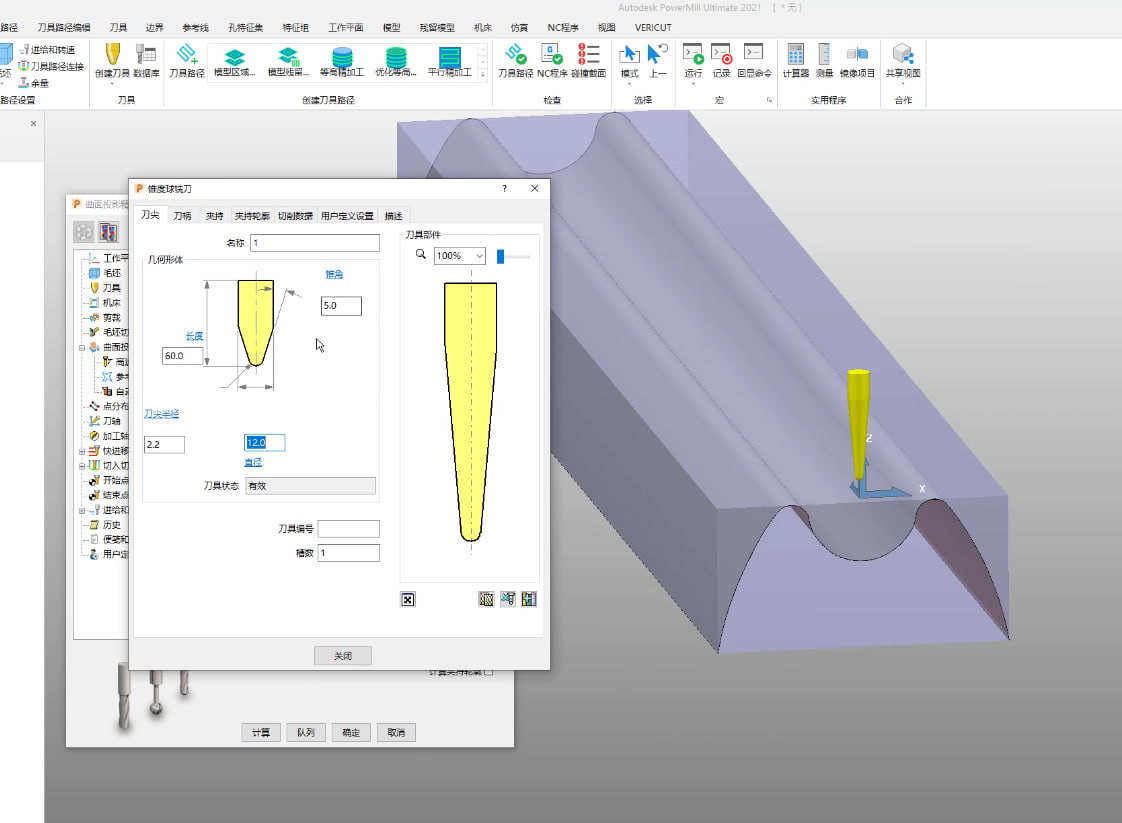
Spindle speed (RPM) and feed rate must work together to achieve efficient stone cutting.
Higher spindle speed does not automatically produce better results. The ideal combination depends on several factors:
- Cutting tool diameter and design
- Granite, marble, or other stone properties
- Cutting depth and width
- Roughing or finishing operations
- Tool manufacturer's recommended operating range
For example, a small diamond engraving tool used for detailed patterns may require different machining parameters from a larger roughing cutter.
How to prevent it:
Use suitable RPM and feed rate settings for each tool and material. Avoid copying the same parameters across different cutter sizes or stone types without verification.
4. Using the Wrong Diamond Cutting Tool
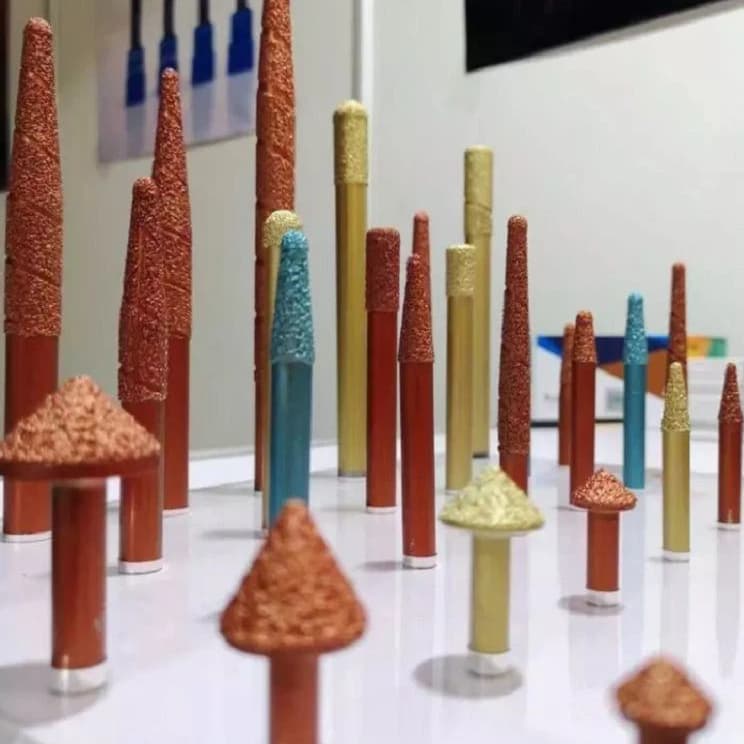
Not all diamond tools are designed for the same machining applications. Different stone materials and carving tasks require different cutter structures, diamond specifications, and bond characteristics.
For example:
- Roughing tools: Designed for efficient material removal.
- Finishing tools: Used to improve surface details and carving quality.
- Engraving tools: Suitable for lettering, patterns, and fine decorative work.
- Material-specific diamond tools: Selected according to stone properties and cutting requirements.
Using a finishing cutter for heavy roughing, for instance, may overload the tool and shorten its service life.
How to prevent it:
Choose the cutting tool according to the stone material, machining stage, and required carving detail. Consult the tool supplier when processing unfamiliar materials.
5. Hidden Cracks and Hard Mineral Inclusions
Natural stone is not always uniform.Granite and marble may contain internal cracks, mineral variations, hard inclusions, or weak structural areas that are difficult to identify from the surface. When a CNC cutting tool encounters an unexpected hard inclusion or unstable section, cutting forces can change suddenly. This may cause tool chipping, vibration, or breakage.
How to prevent it:
Inspect stone blocks before machining, particularly when working with materials containing visible cracks or inconsistent textures. For unfamiliar stone, consider beginning with conservative cutting parameters and adjusting them after evaluating machining performance.
6. Insufficient Cooling Water
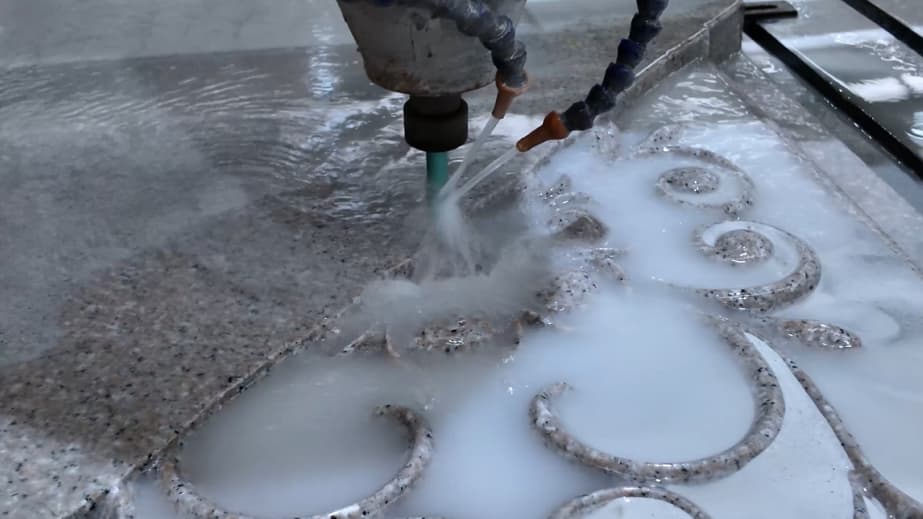
Cooling is essential for many diamond-tool stone machining operations. During cutting, friction generates heat at the contact area between the tool and the stone. Without sufficient cooling, excessive temperatures can accelerate tool wear and damage the diamond cutting structure. Poor cooling can also make it more difficult to remove stone particles from the cutting area.
How to prevent it:
- Check the cooling water supply before machining.
- Make sure water reaches the actual cutting area.
- Inspect the water pump, hoses, and nozzles regularly.
- Remove blockages caused by stone slurry or debris.
For water-cooled stone carving operations, maintaining adequate and consistent water flow is an important part of tool protection.
7. Unstable Stone Fixing
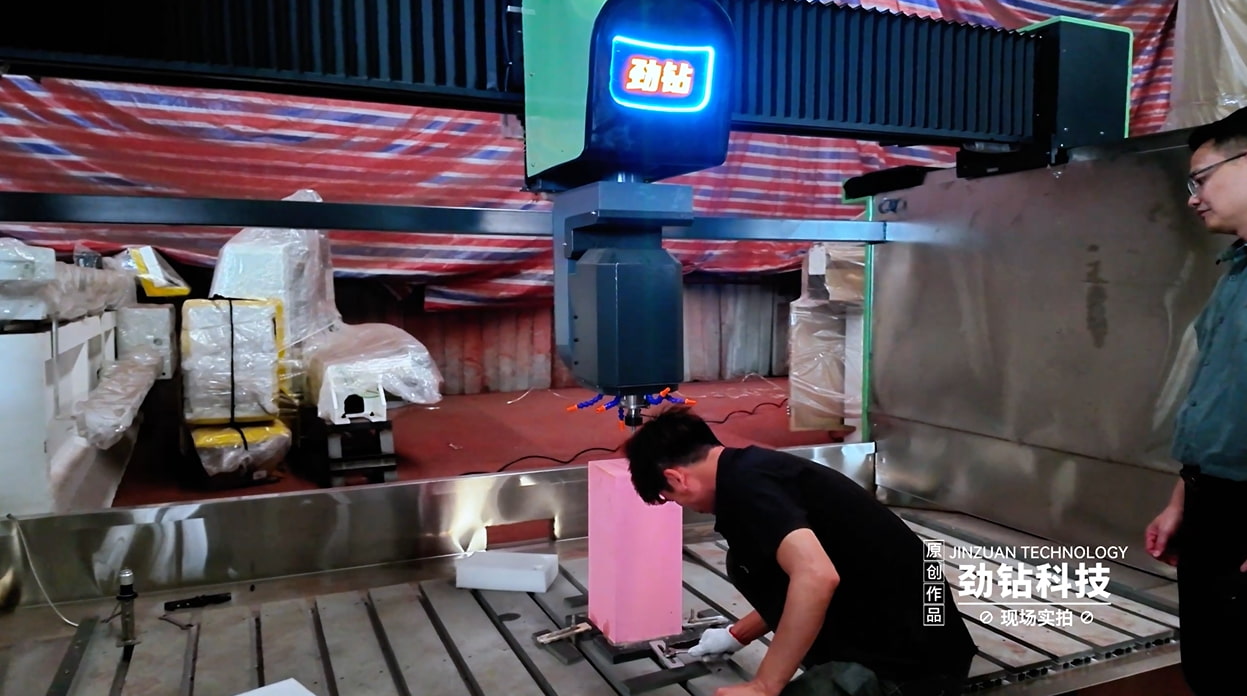
Even with suitable cutting parameters, a poorly secured workpiece can cause serious machining problems. If the stone moves during carving, the cutting tool may experience sudden impact loads. This can damage the cutter, affect carving accuracy, or cause defects on the stone surface.
How to prevent it:
Before starting the CNC stone carving machine, confirm that the stone is securely positioned and that all clamps or supporting fixtures are properly installed. For irregular stone blocks, additional support may be necessary to prevent movement or vibration.
8. Incorrect Tool Installation
Sometimes the problem is not the cutting parameters or the stone itself, but how the cutter is installed. A loose tool holder, excessive runout, damaged collet, or incorrect mounting position can cause uneven cutting forces. These problems may produce abnormal vibration and increase the risk of cutter failure.
How to prevent it:
Check the tool holder and collet condition, confirm that the cutter is properly tightened, and inspect tool runout when necessary. Always follow the machine and tool manufacturer's installation instructions.
How to Troubleshoot Frequent Cutter Breakage
If your stone CNC router repeatedly breaks cutting tools, replacing the cutter without investigating the cause may result in the same problem happening again.
A systematic inspection can help identify the actual issue.
| Problem Observed | Possible Cause | Recommended Action |
|---|---|---|
| Cutter breaks during deep carving | Excessive cutting depth | Reduce depth and use multiple passes |
| Strong vibration during machining | High feed rate or unstable fixing | Adjust feed rate and inspect fixtures |
| Rapid cutter wear | Incorrect RPM or insufficient cooling | Review spindle settings and water supply |
| Cutter breaks on certain stone areas | Internal cracks or hard inclusions | Inspect material and reduce cutting load |
| Poor carving finish | Unsuitable tool or machining parameters | Select an appropriate finishing cutter |
| Repeated tool breakage after replacement | Tool installation or runout problem | Inspect tool holder, collet, and mounting |
These checks help operators identify common problems, although the exact solution depends on the machine configuration, cutter specifications, and stone material.
Can a Better CNC Stone Carving Machine Reduce Tool Breakage?
A properly configured CNC stone carving machine can help maintain consistent machining conditions, but machine quality alone cannot eliminate cutter breakage.
Several machine characteristics can influence cutting performance:
- Machine Rigidity: A rigid machine structure helps reduce unwanted vibration during stone processing.
- Spindle Performance: A suitable spindle provides the speed and power required for the intended carving operations.
- Motion Control: Consistent axis movement and appropriate feed control help maintain stable cutting conditions.
- Cooling System: An effective water-cooling arrangement supports heat removal and debris flushing.
At JINZUAN Machinery, we understand that successful stone carving depends on the combination of machine configuration, cutting tools, machining parameters, and material characteristics.
Whether producing granite tombstone lettering, marble relief sculptures, architectural stone decorations, or detailed carving patterns, selecting suitable equipment and machining strategies is essential.
Final Thoughts
Cutter breakage is not always a sign of poor tool quality. It can also indicate that the machining process needs adjustment.
Before replacing another broken diamond cutter, review the cutting depth, feed rate, spindle speed, cooling conditions, workpiece stability, and tool installation.
The goal is not simply to make the cutter last longer, but to achieve a more efficient and predictable stone machining process.
Need help choosing a CNC stone carving machine for your granite or marble projects?
Contact JINZUAN Machinery to discuss your stone materials, carving applications, and production requirements. Our team can help you explore suitable machine configurations for your workshop.