Hydrogen fuel cell vehicles are becoming an increasingly important part of the global push toward clean transportation. As more automotive manufacturers, system integrators, and aftermarket distributors enter this space, one practical question keeps coming up: what kind of hose is actually suitable for a hydrogen fuel cell system, and why does the material selection matter so much?
This article addresses that question directly. It explains how a hydrogen fuel cell vehicle works, why silicone hoses are commonly specified for these systems, what technical requirements apply, and what B2B buyers should consider when sourcing hydrogen fuel cell silicone hose for automotive or commercial vehicle applications.
How a Hydrogen Fuel Cell Vehicle Works
Understanding the hydrogen fuel cell vehicle working principle helps explain why hose selection is more demanding than in a conventional vehicle.
A hydrogen fuel cell vehicle generates electricity through an electrochemical reaction between hydrogen and oxygen, rather than burning fuel. The most widely used type is the Proton Exchange Membrane (PEM) fuel cell, in which hydrogen is supplied to the anode side of the fuel cell stack, while air — containing oxygen — is supplied to the cathode side. The reaction produces electricity, water, and heat. That electricity powers the drive motor directly, or is stored temporarily in a battery.
The fuel cell stack operates within a carefully controlled environment. Coolant circuits manage temperature. Air supply systems manage cathode-side oxygen delivery. Hydrogen supply lines connect storage tanks to the stack. Each of these circuits requires hoses that can handle the specific medium, temperature range, and purity requirements of that subsystem — without introducing contaminants that could degrade stack performance over time.
This is where standard automotive hose materials often fall short.
Why Silicone Hose Is Specified for Hydrogen Fuel Cell Systems
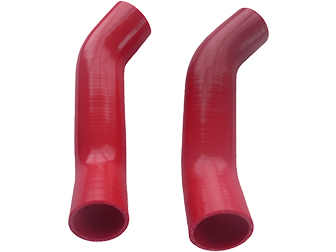
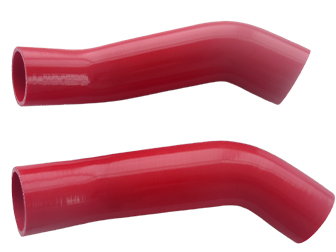
Silicone has properties that make it well suited to the operating conditions found inside a hydrogen fuel cell system. These include a wide temperature range, flexibility at both high and low temperatures, resistance to ozone and UV exposure, and low compression set over time.
However, the most critical requirement in fuel cell applications is not temperature resistance alone — it is chemical purity. In fuel-cell cooling systems, hose materials should be selected and validated to minimize the release of extractable substances that could increase the electrical conductivity of deionized coolant.
Conventional silicone can contain trace volatile compounds, including cyclic siloxanes, which may affect sensor accuracy and membrane performance if released into the system over time. For this reason, hydrogen fuel cell silicone hose is typically produced using specially formulated silicone compounds with an extremely low proportion of volatile extractables — a requirement that goes beyond what standard automotive silicone hoses are designed to meet.
RAINBOW develops and manufactures lined silicone hose solutions specifically for hydrogen fuel cell, clean energy, and hybrid vehicle applications. The lined hose construction is engineered to significantly reduce the release of trace extractables — such as siloxanes — helping to protect sensor performance and membrane integrity within the fuel cell stack. For systems requiring additional resistance to heat, oil, fuel, or chemical media, FKM-lined silicone hose is also available. The FKM inner lining provides an effective barrier between the transported medium and the outer silicone structure, improving chemical resistance in demanding anode-side or fuel-supply applications.
Key Technical Requirements for Hydrogen Fuel Cell Hose
When specifying a hydrogen fuel cell hose for automotive use, buyers should look beyond basic temperature ratings. The following requirements are typically relevant:
Flame retardancy. Fuel cell vehicles carry hydrogen under pressure. Hose materials used in these systems are commonly required to meet UL94-V0 flame retardancy standards to minimize fire risk in the event of a fault condition. Products intended for railway vehicle applications may also need to meet EN45545-2.
Low extractable compounds. Hoses in contact with deionized cooling water or sensitive electrochemical environments must not release substances that alter conductivity or contaminate membranes. This is one of the most important material selection criteria in fuel cell hose specification.
Chemical resistance. Different subsystems within a hydrogen fuel cell vehicle may expose hoses to deionized water, hydrogen gas, air, or chemical coolants. Standard silicone provides adequate resistance for many of these media, while FKM-lined constructions offer enhanced protection in applications involving fuel, oil, or more aggressive chemical environments.
Temperature resistance. Fuel cell thermal management systems have specific coolant temperature requirements that differ from those of conventional combustion engine cooling circuits, and hose materials must be validated for the full operating range of the system, including cold-start conditions.
Mechanical strength and flexibility. Hoses in vehicle applications must withstand vibration, pressure cycling, and installation in confined spaces. Reinforced constructions using polyester or other fiber layers improve dimensional stability without sacrificing flexibility.
Electrical surface resistance. In certain fuel cell circuit designs, controlled electrical surface resistance is specified to prevent static charge buildup on hose surfaces, which is a recognized safety consideration in hydrogen handling environments.
Conclusion
Silicone hose selection for hydrogen fuel cell vehicles is a more technically specific decision than it may first appear. The hydrogen fuel cell system places demands on hose materials that go well beyond temperature resistance — including purity, flame retardancy, chemical resistance, mechanical integrity, and compatibility with deionized water circuits.
For B2B buyers — whether you are an automotive OEM, a system integrator, a commercial vehicle manufacturer, or a distributor sourcing components for hydrogen fuel cell vehicle projects — choosing the right hose supplier matters as much as choosing the right material.
RAINBOW has been specializing in performance silicone hose manufacturing since 2009 and is ISO 9001 and IATF 16949 certified. Our fuel cell silicone hose range covers anode hose, cathode hose, and coolant hose solutions, with both standard lined and FKM-lined constructions available. Products are supported by SAE J20, UL94-V0, EN45545-2, RoHS, and REACH test documentation. We respond to all enquiries within 24 hours.
If you are currently sourcing hydrogen fuel cell silicone hose or evaluating suppliers for an upcoming project, we encourage you to reach out now. Share your application details, dimensions, required standards, and target quantity, and our team will provide a technical evaluation and competitive quotation.
The hydrogen vehicle market is moving quickly. The earlier you confirm your supply chain, the better positioned your project will be.
FAQ:
Q1: How to choose a hydrogen fuel hose for automotive use?
Start with the subsystem. Anode hose, cathode hose, and coolant hose each have different requirements in terms of chemical resistance, extractable levels, and pressure ratings. Key selection criteria include operating temperature, pressure, the medium being transferred, low extractable compound requirements, and applicable standards. For complex geometries, providing a drawing or sample significantly reduces development time.
Q2: Is hydrogen fuel hose compatible with high-pressure systems?
Not all silicone hoses are rated for high-pressure hydrogen supply lines. Compatibility depends on reinforcement structure, wall thickness, and connection design. For high-pressure applications, hose construction must be confirmed against the system's maximum operating and burst pressure. FKM-lined constructions are also available where hydrogen permeation resistance is required. Always validate the hose specification against the actual system pressure before ordering.
Q3: What are the safety standards for hydrogen fuel hoses?
Commonly referenced standards include ANSI/CSA HGV 4.2 for hydrogen hoses used in fuel stations, dispensers, and vehicle fuel systems, UL94-V0 for flame retardancy, and EN45545-2 for railway vehicle fire protection. SAE J20 applies to coolant hose performance. Buyers should confirm which standards apply to their specific market and application, and request test documentation from the manufacturer accordingly.