When purchasing a CNC stone carving machine, buyers often encounter a confusing situation: two machines have the same working dimensions, spindle power, and number of axes, yet their quotations are surprisingly different.
Does a higher price always mean better quality? Is a cheaper CNC machine necessarily less reliable? Not exactly.
The price difference often comes from factors that are difficult to identify in product photos or basic specification sheets. Machine structure, mechanical components, manufacturing processes, precision control, and after-sales service can all influence the final cost.
Understanding these differences helps stone factories make smarter investments rather than simply choosing the lowest quotation.
1. Machine Structure: Same Working Size, Different Strength
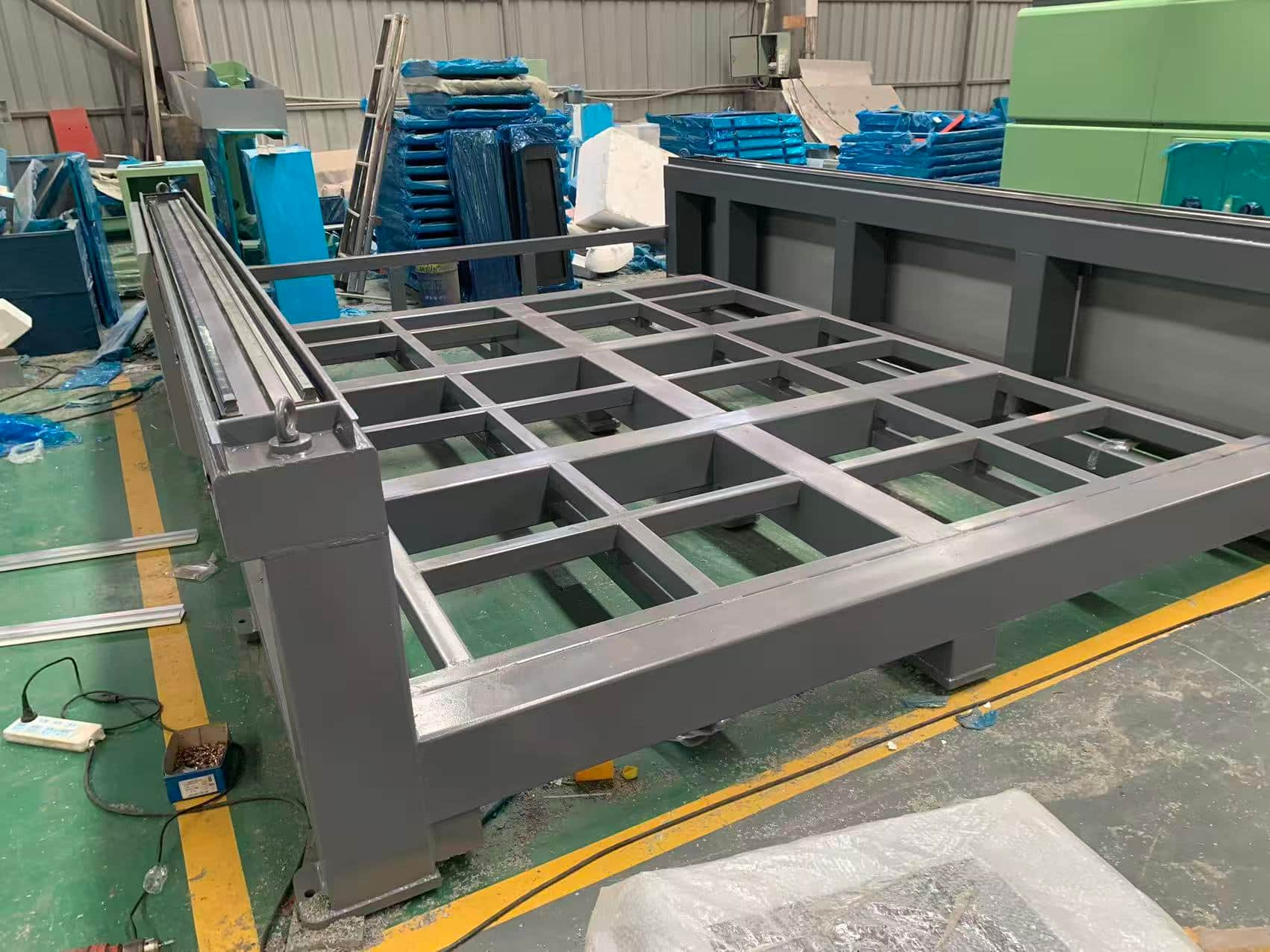
The machine frame is the foundation of CNC machining performance. Consider two 3-axis stone carving machines with identical 1500 × 1500 mm working areas. Although their processing dimensions are the same, their structural designs may differ significantly.
Important structural factors include:
- Steel thickness: The thickness and arrangement of structural steel affect frame rigidity.
- Machine weight: Weight distribution and structural design influence stability during cutting.
- Gantry construction: A rigid gantry helps reduce unwanted vibration during operation.
- Frame processing: Proper welding, stress relief, and precision machining help maintain structural accuracy.
Stone materials such as granite and marble generate considerable cutting resistance, especially during deep carving or continuous processing.
A machine with insufficient rigidity may experience vibration, reduced surface quality, or accelerated component wear. Therefore, the same working dimensions do not necessarily mean the same structural quality.
2. Core Components: Look Beyond Spindle Power
Spindle power is one of the most frequently compared specifications when purchasing a CNC stone engraving machine. However, an 11kW spindle alone cannot determine the overall performance of the equipment. The complete mechanical and electrical system matters just as much.
Important components include:
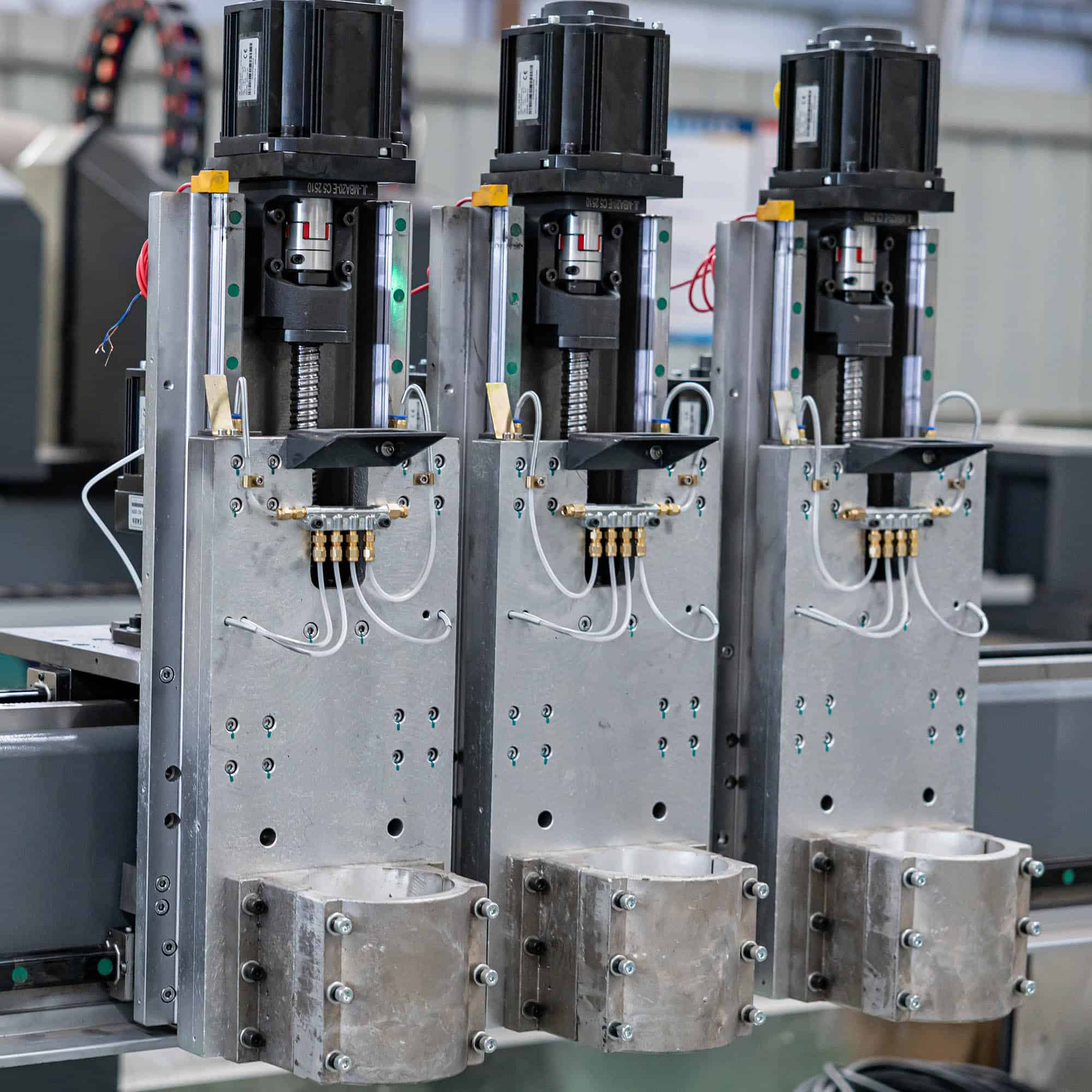
- Servo Motors and Drivers: Influence motion control, responsiveness, and positioning performance.
- Guide Rails and Bearings: Support smooth, accurate movement under machining loads.
- Reducers and Transmission Systems: Affect torque transmission, backlash, and movement stability.
- CNC Control System: Determines available functions, program execution, and operating convenience.
- Electrical Components: Influence system reliability and maintenance requirements.
- Lubrication System: Helps protect moving components and reduce wear.
For example, two CNC machines may both use 7.5kW spindles, but differences in their guide rails, drive systems, and control configurations can lead to different machining experiences. When comparing quotations, buyers should request a detailed component list instead of relying only on spindle specifications.
3. Manufacturing and Assembly: Where Precision Begins
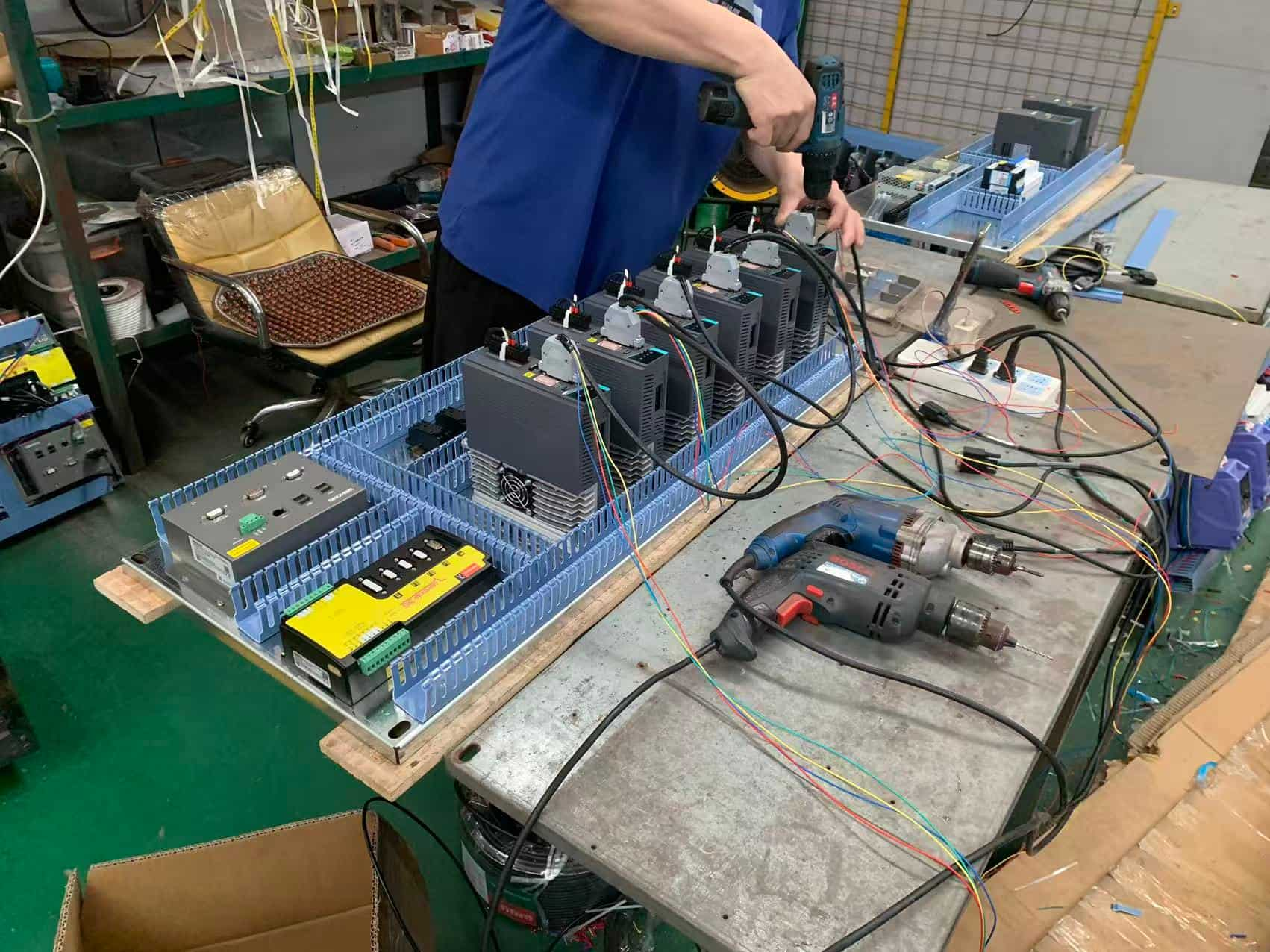
CNC machining accuracy is not achieved simply by installing high-quality components. It depends on the entire manufacturing process.
A typical production process includes:
Structural Design → Welding → Stress Relief → Precision Machining → Assembly → Calibration → Testing. Each stage contributes to the machine's final performance.
For example, improper gantry alignment may affect movement accuracy even when high-quality linear guides are installed. Similarly, poorly adjusted transmission components may cause backlash or inconsistent movement.
Before purchasing, buyers can ask manufacturers about:
- Frame manufacturing and stress-relief procedures
- Guide rail installation and alignment
- Machine calibration methods
- Factory acceptance testing
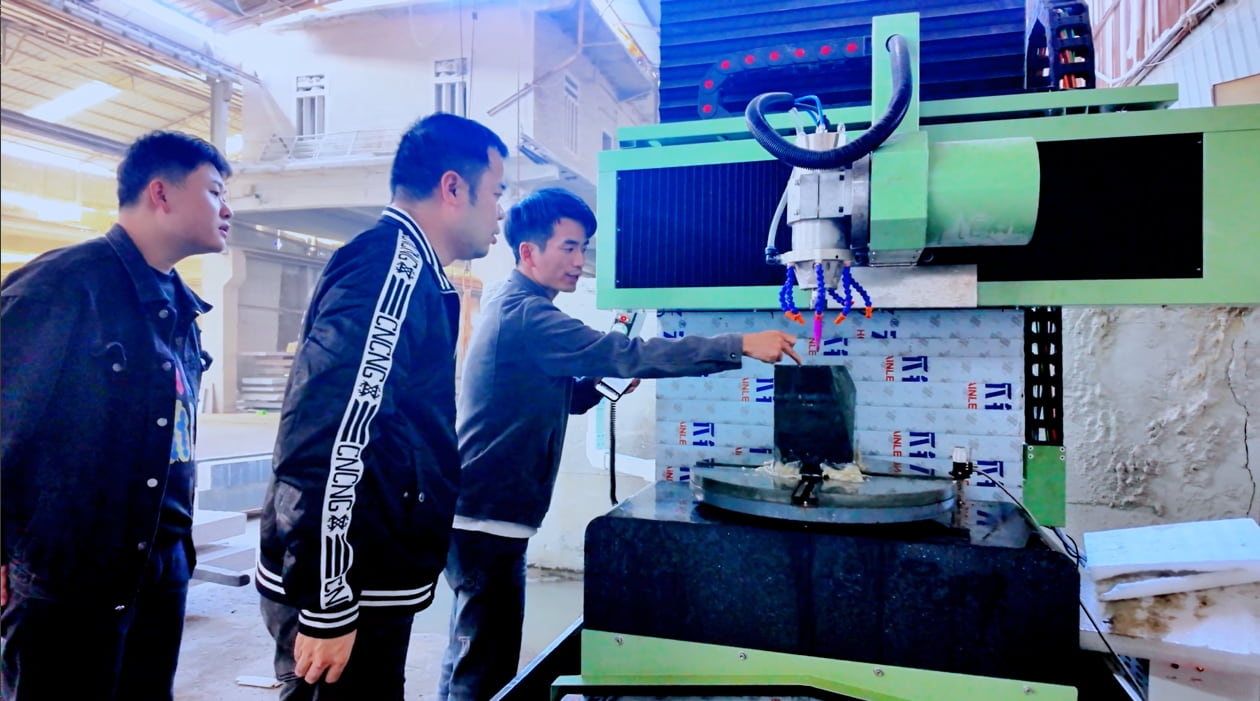
- Actual stone carving test results
A machine that performs accurately during real stone processing provides more meaningful evidence than specifications alone.
4. Is the CNC Machine Really Designed for Stone?
Not every CNC router is suitable for stone processing. Machines designed primarily for wood, foam, or other lightweight materials may resemble CNC stone carving machines, but their structures and operating requirements can be different.
Stone machining often involves:
- Higher cutting resistance
- Continuous exposure to water and abrasive slurry
- Heavy workpieces
- Extended machining cycles
- Demanding surface finishing requirements
A dedicated CNC stone carving machine should be designed with these working conditions in mind.
For instance, suitable structural rigidity, component protection, cooling arrangements, and lubrication systems are important considerations for long-term stone processing. Buyers should also confirm whether the machine can handle their intended applications, such as marble relief carving, granite lettering, stone column engraving, or architectural stone decoration.
The important question is not only what the machine can carve, but whether it is designed to perform that work consistently.
5. Machine Configuration: Standard vs. Customized Equipment
Two CNC stone carving machines can have identical basic specifications but different optional configurations. For example, a standard 3-axis machine may be equipped with additional functions depending on the customer's production requirements.
Possible configuration differences include:
- Standard spindle power vs. upgraded spindle power
- Standard Z-axis travel vs. extended Z-axis travel
- Basic control functions vs. additional control capabilities
- Manual lubrication vs. automatic lubrication
- Standard flat carving vs. optional rotary-axis processing
- Single-head processing vs. multi-head processing
A stone factory mainly producing flat relief panels may require a different configuration from a factory manufacturing cylindrical columns or large decorative stone components.
Additional features increase the initial investment, but they may also expand the machine's processing capabilities. The best configuration is not necessarily the most expensive one. It is the one that matches the buyer's actual production requirements.
6. After-Sales Service: The Cost That Buyers Often Overlook
Purchasing a CNC stone carving machine is a long-term investment. After the equipment arrives, installation, operator training, maintenance, and technical support become important parts of the ownership experience.
Before choosing a supplier, buyers should confirm:
- Is installation guidance available?
- Will the supplier provide operator training?
- How are technical problems diagnosed remotely?
- Are commonly used spare parts available?
- What does the warranty actually cover?
- How are replacement parts delivered internationally?
For overseas stone factories, the availability of technical assistance can directly affect how quickly production resumes after a machine problem. A lower initial quotation may become less attractive if installation difficulties, unavailable spare parts, or prolonged downtime increase operating expenses.
7. Purchase Price vs. Long-Term Operating Cost
The purchase price represents only one part of the total investment. Buyers should also consider electricity consumption, tool wear, maintenance expenses, production efficiency, and possible downtime.
For example, Machine A may cost less initially, while Machine B offers features that reduce maintenance requirements or improve processing efficiency. However, those benefits should be evaluated using actual production conditions rather than assumptions.
A useful way to compare machines is:
Total Cost of Ownership = Purchase Price + Installation + Operating Costs + Maintenance + Downtime Costs
For stone factories planning continuous production, the total cost over several years may be more important than the initial price difference.
8. How to Compare CNC Stone Carving Machine Quotations
Before making a purchasing decision, ask different suppliers to provide quotations based on the same processing requirements. Make sure the comparison includes the machine structure, major component models, optional equipment, and after-sales conditions.
A practical purchasing checklist should cover:
|
Comparison Factor |
What to Check |
Why It Matters |
|---|---|---|
|
Machine Structure |
Steel thickness, gantry design, frame construction |
Influences rigidity and machining stability |
|
Spindle System |
Power, speed range, cooling method |
Affects suitability for different carving tasks |
|
Motion Components |
Motors, drivers, guide rails, reducers |
Influences motion accuracy and reliability |
|
CNC Control System |
Functions, software compatibility, operation interface |
Affects usability and processing capabilities |
|
Manufacturing Quality |
Welding, stress relief, assembly, calibration |
Contributes to precision and consistency |
|
Machine Configuration |
Rotary axis, Z travel, lubrication, optional functions |
Determines application flexibility |
|
After-Sales Service |
Training, warranty, technical support, spare parts |
Helps reduce maintenance difficulties and downtime |
|
Total Ownership Cost |
Purchase, installation, maintenance, operation |
Helps evaluate long-term investment value |
This approach makes it easier to identify what is included in each quotation and why prices differ.
Conclusion: Compare Engineering, Not Just Specifications
Two CNC stone engraving machines may look almost identical in photos and share similar technical parameters. But their actual value depends on much more than appearance. Machine structure, component selection, manufacturing accuracy, configuration, and after-sales support all contribute to the final price.
A more expensive machine is not automatically the better choice, and a lower-priced machine is not necessarily inferior. The key is to understand what you are paying for and whether the machine meets your production requirements.
At JINZUAN Machinery, we provide CNC stone carving solutions for applications including stone reliefs, architectural decorations, columns, monuments, and customized stone products.
Whether you need a standard 3-axis stone carving machine or a customized multi-axis solution, our team can help you evaluate suitable machine configurations based on your materials, processing dimensions, and production needs.
Looking for a CNC stone carving machine? Contact JINZUAN Machinery to discuss your project and request a detailed machine quotation.